The Job Before the Job
Most problems on site were visible before the vans left.
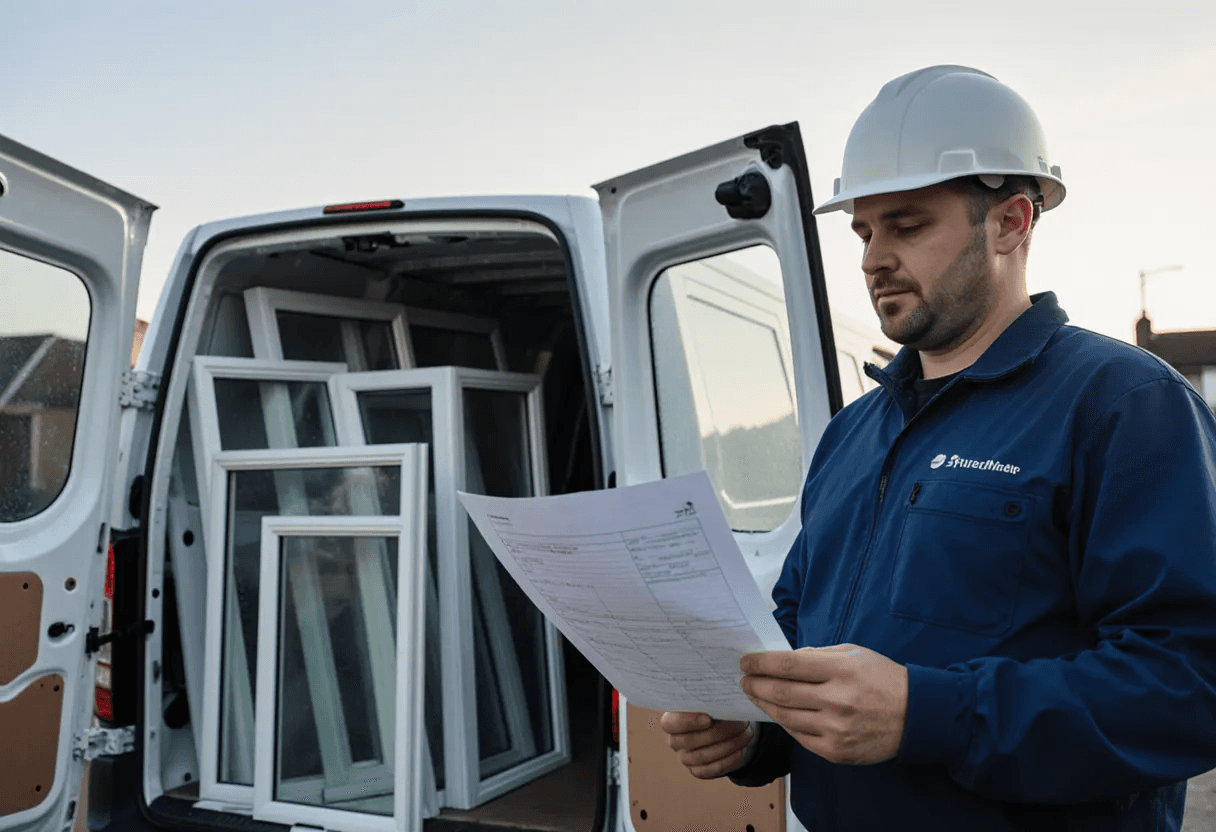
Most problems on site were visible before the vans left
Most problems that show up on site were visible before the vans left.
A frame colour that did not match the existing windows because someone missed a note on the survey. A bay window ordered without checking the lintel condition that had been flagged. A customer who specifically asked for obscure glass on the bathroom window and found out on fitting day that it was on the quote but not on the manufacturing order. These are not rare mistakes. They are the ordinary cost of a gap that most installation businesses have learned to live with — the gap between what was recorded at survey and what actually reached the team on site.
The problem is not usually carelessness. It is volume and pace. A busy installer or survey team is moving job to job. Notes get taken. Information gets passed across. But the step of actually checking that everything is consistent — that the spec matches the survey, that the customer requests are reflected in the order, that nothing has been quietly dropped between conversations — that step almost never gets the time it deserves.
AI is starting to make that check faster.
The simplest version is something you can do today. Before a job is ordered or dispatched, take the key documents — the survey notes, the quote, the order — and ask an AI to read them and flag any discrepancies. Describe what the job should include. Ask whether anything looks inconsistent. It will not replace a thorough read-through, but it will catch things that a busy person under time pressure might miss. A missing specification. A colour noted in one place but not carried across. A customer request that made it to the quote but not the order.
For businesses that want to formalise this, tools like DocChecker are designed specifically for this kind of check in glazing. It compares documents against your own business rules and flags discrepancies before they reach production — combining AI with the knowledge of experienced glazing order processors who understand what should and should not be there. The principle is the same whether you are doing it manually in ChatGPT or running a dedicated system: the time to catch a problem is before the glass is cut.
There is a wider point here about where the real cost of a remake sits. Most of the attention goes on the remake itself — the material, the time, the delay to the customer. But the cost starts earlier, at the moment the information was available to catch the error and the check did not happen. That is the gap worth closing.
A good pre-job review is not a long process. It is ten minutes of someone looking at the right documents with the right question: is everything here consistent, and is everything the customer was promised actually in the order? AI makes that ten minutes more reliable, because it does not skim and it does not assume.
If you are using Business Pilot or a similar system, a lot of this information is already in one place. The question is whether anyone is looking at it together — survey notes alongside the order, customer requests alongside the specification — before the job is released.
The best installation businesses are moving toward treating the pre-job check as part of the job, not optional preparation that gets skipped when things are busy. It will not eliminate every error. But it will change the odds. And it will change the conversation when something does go wrong — because you will know whether the information was there and missed, or whether it was never recorded in the first place.
Most problems on site had a moment when they could have been caught. The job before the job is about making sure that moment does not get missed.
Originally published in Total Installer.